 Nagano Hotel Navi
| New Year's Day | Jan 1, 1:00 Chohaishiki. Jan 1-3 Shushoe (Jodo sect 11:00, Tendai sect 15:00) |
|---|---|
| Nanakusa-e | Jan 7, 3:00. The Hitoyose bell from 2:00. Goinmon Choudai Jan 7-15 |
| Winter closing | Main hall inner sanctuary until 16:00 from Dec to Feb. Sanmon, Kyozo and museum 9:00-16:00 (Dec 31 until 13:00) |
| Access | About 15 min by local bus from JR Nagano Station to Zenkoji Daimon (190 yen), then 5 min on foot |
Stay nearby
See all 15 places nearby ›Services in January
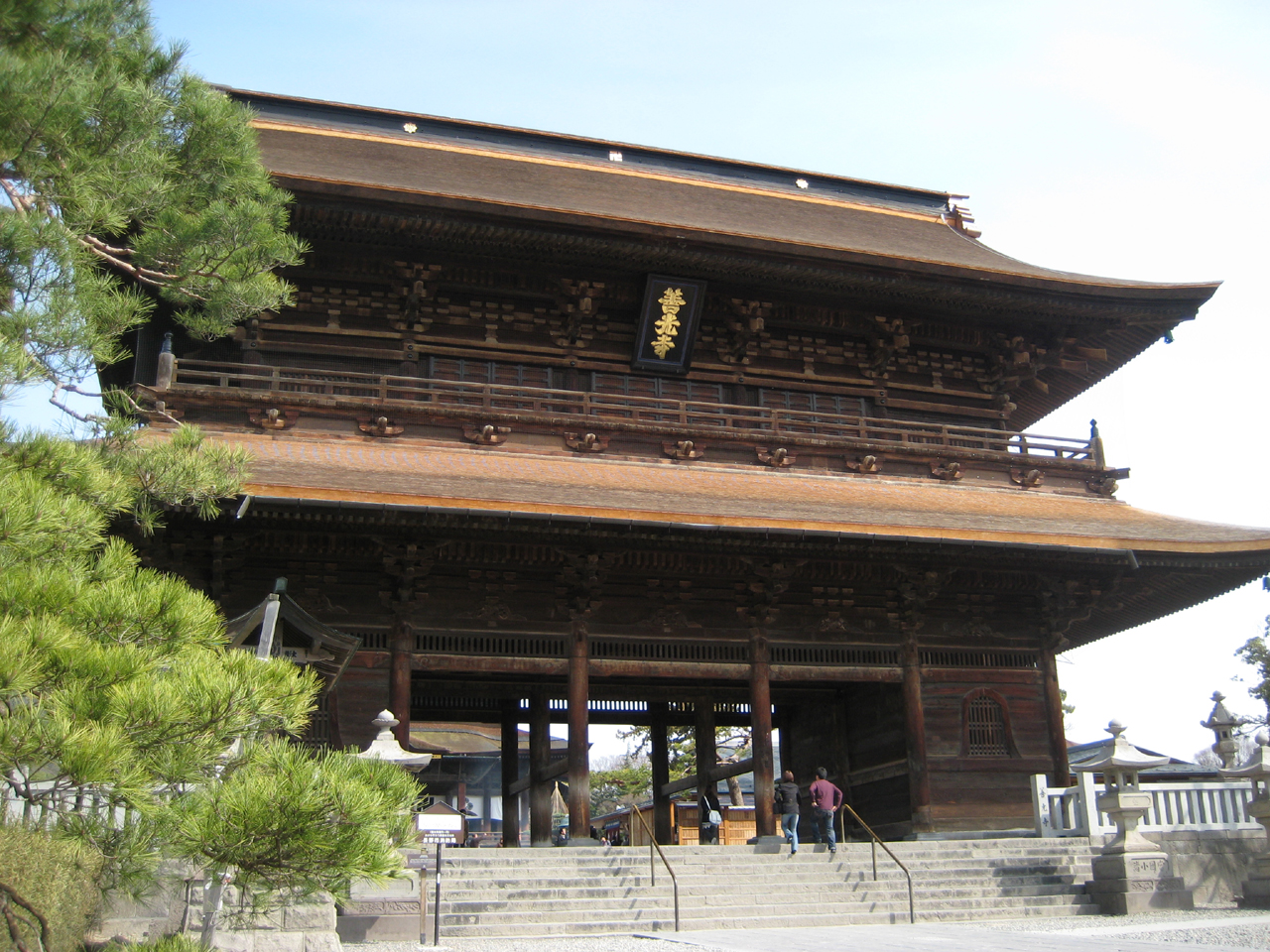
Zenkoji's annual events begin with the Chohaishiki at 1:00 on New Year's Day. It is the first service of the year, around the time the New Year's Eve bells finish ringing, with all the temple's monks taking part. From January 1 to 3, the Shushoe is held from 11:00 by the Jodo sect and from 15:00 by the Tendai sect.
On the night of January 6 is the Binzuru-mawashi, in which the attendant reads sutras to the Binzuru statue, goes around the Tsumadodai three times and gives out rice paddles to worshippers. On January 7 the Nanakusa-e starts at 3:00, and the general public can attend. The Hitoyose bell is rung at the bell tower from 2:00, worshippers can ring it, and no application is needed.
Goinmon Choudai, burning and Setsubun
From January 7 to 15 is the Goinmon Choudai, a ritual in which a monk presses the three-seal treasure seal to a worshipper's head, and those who receive it are said to be assured of rebirth in paradise. At 13:00 on January 15, last year's amulets, kadomatsu pine decorations and shimenawa are burned in front of the Six Jizo, and anyone can take part.
February 3 is Setsubun. Led by Zenkoji Kiyari, an Intangible Cultural Property of Nagano City, a procession of red and blue demons, the year's lucky men and women walks from the Niomon Gate to the main hall, and after the exorcism ceremony, lucky beans are thrown from the main hall corridor. If you want to join the bean throwing, you must apply in advance.
Tickets and winter hours
The main hall inner sanctuary and the Kaidan-meguri tunnel cost 800 yen for general visitors, 300 yen for junior and senior high students and 100 yen for elementary students. The combined ticket with the Sanmon gate, Kyozo and museum is 1,500 yen for general, 600 yen for junior and senior high and 200 yen for elementary students.
The inner sanctuary closes at 16:00 from December to February, and the page notes 13:00 on December 31 and 8:30 on December 28. The Sanmon, Kyozo and museum are open 9:00-16:00, until 13:00 on December 31.
Parking, access and where to stay
From bus stop 1 at the Zenkoji-guchi bus rotary of JR Nagano Station, a local bus for Zenkoji takes about 15 minutes (190 yen) to Zenkoji Daimon, then it is a 5-minute walk to the main hall. By car, it is about 40 minutes from Nagano IC or Suzaka-Nagano-Higashi IC. Parking for cars is 600 yen for up to 2 hours and 300 yen for each additional hour, and cannot be reserved.
To attend the morning service or the late-night Nanakusa-e, staying near Zenkoji or near Nagano Station is easier. Zenkoji also has temple lodgings, introduced on the official site.
Places to stay nearby
- Hotel Araratto0.0 km awaySee prices ›
- Pension Forest0.0 km awaySee prices ›
- Hotel JAL City Nagano0.0 km awaySee prices ›
- Hotel Abesuto Nagano Ekimae0.0 km awaySee prices ›
- World Torekku Deinando Guesthouse Pise0.0 km awaySee prices ›
- Shinshu Zenkoji Yakuo In0.0 km awaySee prices ›
- Zenkoji Shukubo Ryosei In0.0 km awaySee prices ›
- Zenkoji Shukubo Ani Bu Bo0.0 km awaySee prices ›
- Zenkoji Shukubo Fuchi Yuki Bo0.0 km awaySee prices ›
- Zenkoji Kyoju In Youth Hostel0.0 km awaySee prices ›
- Jizo Kan Matsuya Ryokan0.0 km awaySee prices ›
- Susobana Kyo Onsen Uruoi Kan0.0 km awaySee prices ›
- Guesthouse Yumi To Ito0.3 km awaySee prices ›
- Chisun Grand Nagano0.4 km awaySee prices ›
- Guest House hopin.0.4 km awaySee prices ›