 Miyazaki Hotel Navi
| Viewing | Year-round (the visitor centre and horse guides are closed on Tuesdays; the next weekday if Tuesday is a holiday) |
|---|---|
| Visitor centre | PAKALAPAKA 9:00-17:00, closed Tuesdays. Tel 0987-27-3477 |
| Wild horse guide | Reservation required: 30 min 600 yen, 60 min 1,100 yen, 90 min 1,500 yen adults / 1,000 yen children. Book on 090-4588-1133 |
| Lighthouse | Mornings 9:00-12:00 (year-round), afternoons 13:00-16:30 (Nov-Feb). Adults (junior high up) 300 yen, elementary and younger free |
| Foals | Births are March to August (most in April-May). Winter is not foal season |
| Getting around | Kushima community bus Yoka Bus Toimisaki line (runs over New Year), taxis, rental cars |
Stay nearby
See all 15 places nearby ›Where the Misaki horses are in winter
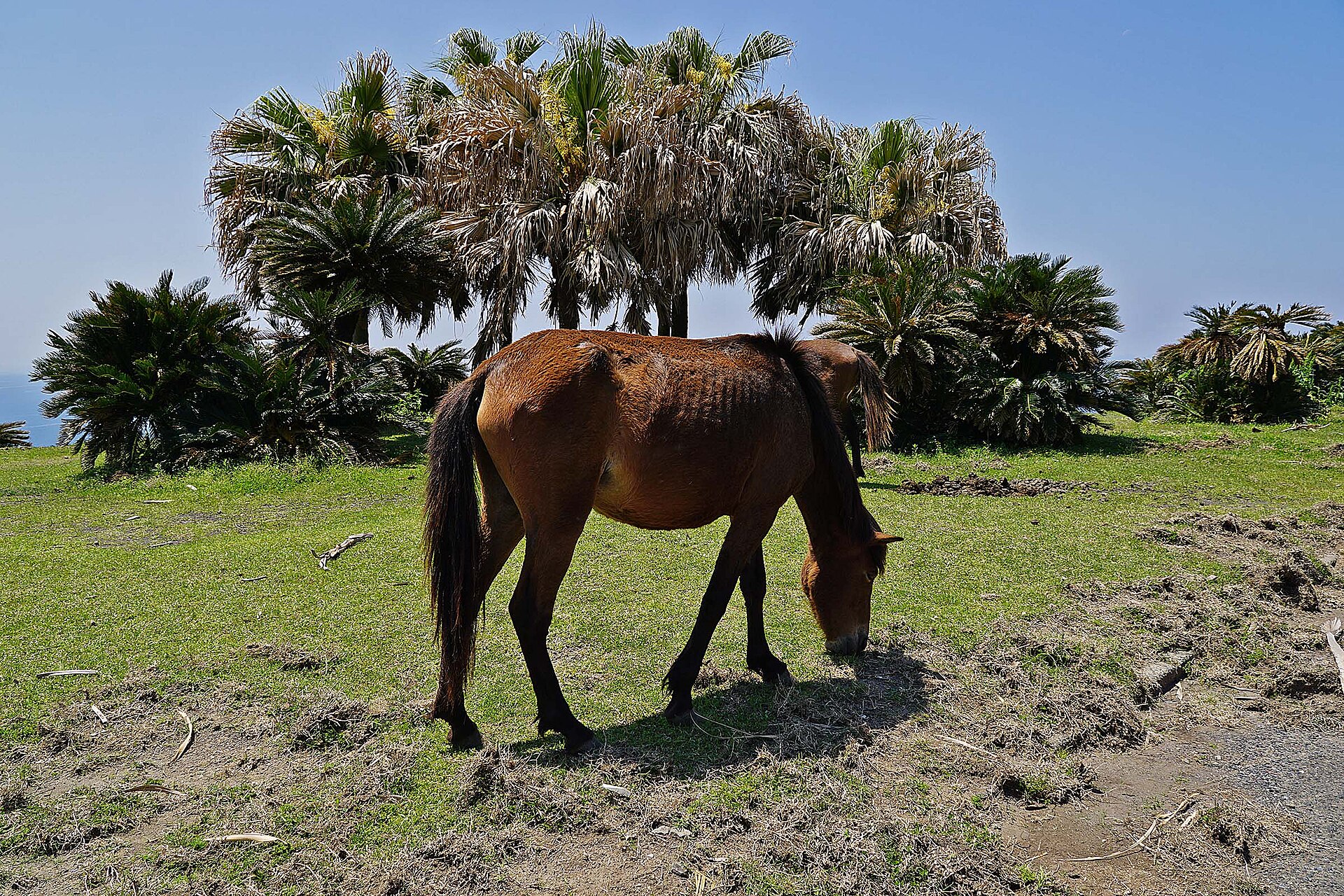
The Misaki horse descends from the herd on a domain ranch set up by the Takanabe clan in 1697, and for over 300 years has been grazed almost entirely in the wild. It was designated a National Natural Monument in 1953.
Kushima City says that from spring to summer the horses live in the grasslands of Komatsugaoka and Ogiyama, in groups of a stallion with several mares and foals. From autumn to winter they split into smaller groups and move to cedar and mixed woods near the coast, eating pampas grass, ferns, and the leaves of Tabunoki and Akamegashiwa.
So in winter do not expect the large single groups of the summer meadows; look along the road and in the woods near the shore. Foals are born from March to August, so there are none from November to February.
Rules for watching
The whole cape is horse habitat. Horses cross the road or lie asleep beyond bends, and may dash out of the hills, so the city asks drivers to slow down.
A horse's field of view is about 350 degrees and it can see its hind legs while facing forward, so the city warns not to approach from behind. The Misaki horse is a national cultural property and harming it can be punished under the Cultural Properties Protection Act.
Visitor centre and wild horse guide
The Toimisaki visitor centre PAKALAPAKA opened in April 2020, is open 9:00-17:00 and closed on Tuesdays. Its glass-walled hall faces the sea for meals and rests, and it has a barrier-free restroom open 24 hours and a nursing room.
The wild horse guide lasts 30 to 90 minutes: 600 yen for 30 minutes, 1,100 yen for 60 and 1,500 yen for adults or 1,000 yen for children for 90. Reservation is required on 090-4588-1133; it runs year-round except Tuesdays.
The city's model course leaves at 9:30 with a guide of about 1 hour 30 minutes, lunch at 11:30, then the Important Cultural Property former Yoshimatsu residence and Shibushi Bay Dolphin Land in the afternoon. Lunch suggestions include the Kushima Katsujime Buri Puri-don at three restaurants in the city.
The lighthouse and the tip of the cape
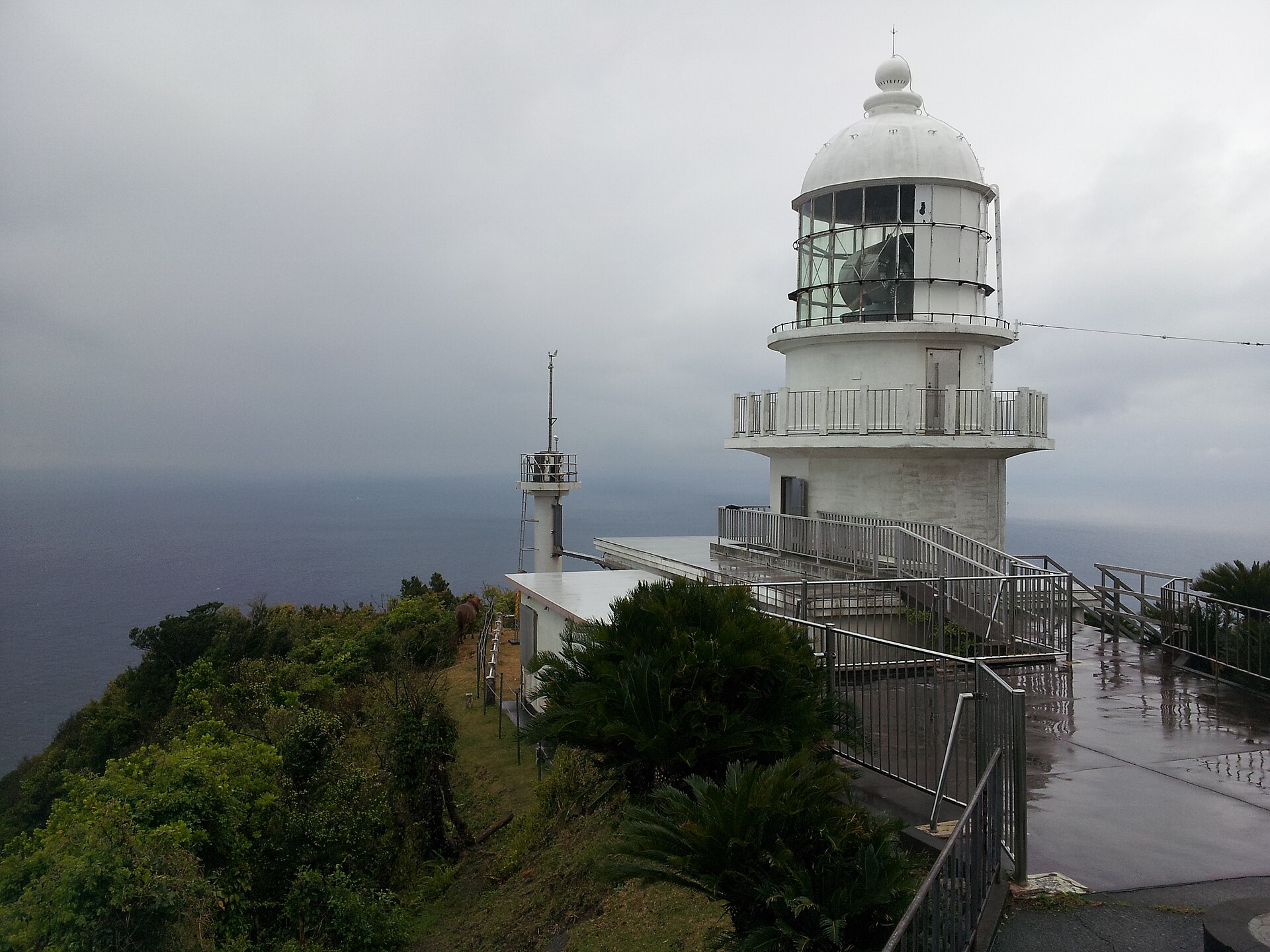
Toimisaki Lighthouse is the only lighthouse in Kyushu open to visitors, with a rooftop garden facing the Pacific. Morning hours are 9:00-12:00 all year and afternoon hours from November to February are 13:00-16:30, with entry until 15 minutes before closing.
The fee is 300 yen for junior high and older and free for elementary school and younger, and it closes in strong wind or typhoons. Because it shuts from 12:00 to 13:00, going to the lighthouse in the morning and the visitor centre at midday fits the day.
At the southern end are a cycad grove of about 3,000 plants (a National Natural Monument) and Misaki Shrine, said to have been founded in 708. The city describes the shrine's deity as one of matchmaking and safe voyages.
Getting around and where to stay
The city's access page lists the community bus Yoka Bus, taxis (Miyako Taxi Kushima office 0987-72-0112) and three rental car firms in Kushima. During New Year (December 29 to January 3) all Yoka Bus routes except the Toimisaki line are suspended; the Toimisaki line runs.
The page does not give the travel time from Miyazaki City to Cape Toi, so check it on a map app before you set out. It does list flight times to Miyazaki Airport: Tokyo 105 min, Osaka 60, Fukuoka 45 and Okinawa 80.
Staying in central Kushima makes taxis and rental cars easier to use. If you stay in Miyazaki City it becomes a day trip out and back, and because the lighthouse's afternoon hours end at 16:30, plan the return from there.
Also in this area
Places to stay nearby
- TOIGLAM solasita0.0 km awaySee prices ›
- Toi Grand Sorashita0.0 km awaySee prices ›
- Kuni Minshuku Sha Toimisaki0.0 km awaySee prices ›
- Toimisaki Ogon-so2.7 km awaySee prices ›
- Kushima Onsen Ikoino Sato7.2 km awaySee prices ›
- Ocean Kushima Rakudano Yado11.1 km awaySee prices ›
- Ko Minka Yado Kyu San Ie Guest House Kyusan Ge11.1 km awaySee prices ›
- Kushima Station Chikaku No Ittogashi Yado Remon Sekkeishitsu Design No Wa Modern House11.4 km awaySee prices ›
- Glamping in Calm Lanai Island Ri Shima14.7 km awaySee prices ›
- Oshima Adobencha Cabin14.7 km awaySee prices ›
- SMALLHOTEL NPORT15.2 km awaySee prices ›
- Sunrise Nichinan16.8 km awaySee prices ›
- Vation rental PIGGY S nichinan17.7 km awaySee prices ›
- Ocean Nichinan Rakudano Yado19.4 km awaySee prices ›
- Kamuranai Harbor20.3 km awaySee prices ›